People
ISO 45001-aligned HSE, competence gates and stop-work authority.

Sustainability
Sustainability at P&ES is three practical duties: people go home, environmental controls are in the method statement, and transition work is engineering — not a press release.
We will not call a diesel displacement a net-zero programme. We will not treat a single solar array as a strategy. Proven versus aspirational is labelled as such in every brief.
A plant that still flares while a slide says ‘transition’ is not a sustainability story. It is a production problem wearing better stationery.
Methane, flaring, diesel on pads, and wasted heat are the first levers. They are unglamorous and they move numbers. Renewables are added where resource, grid code and offtake are real.
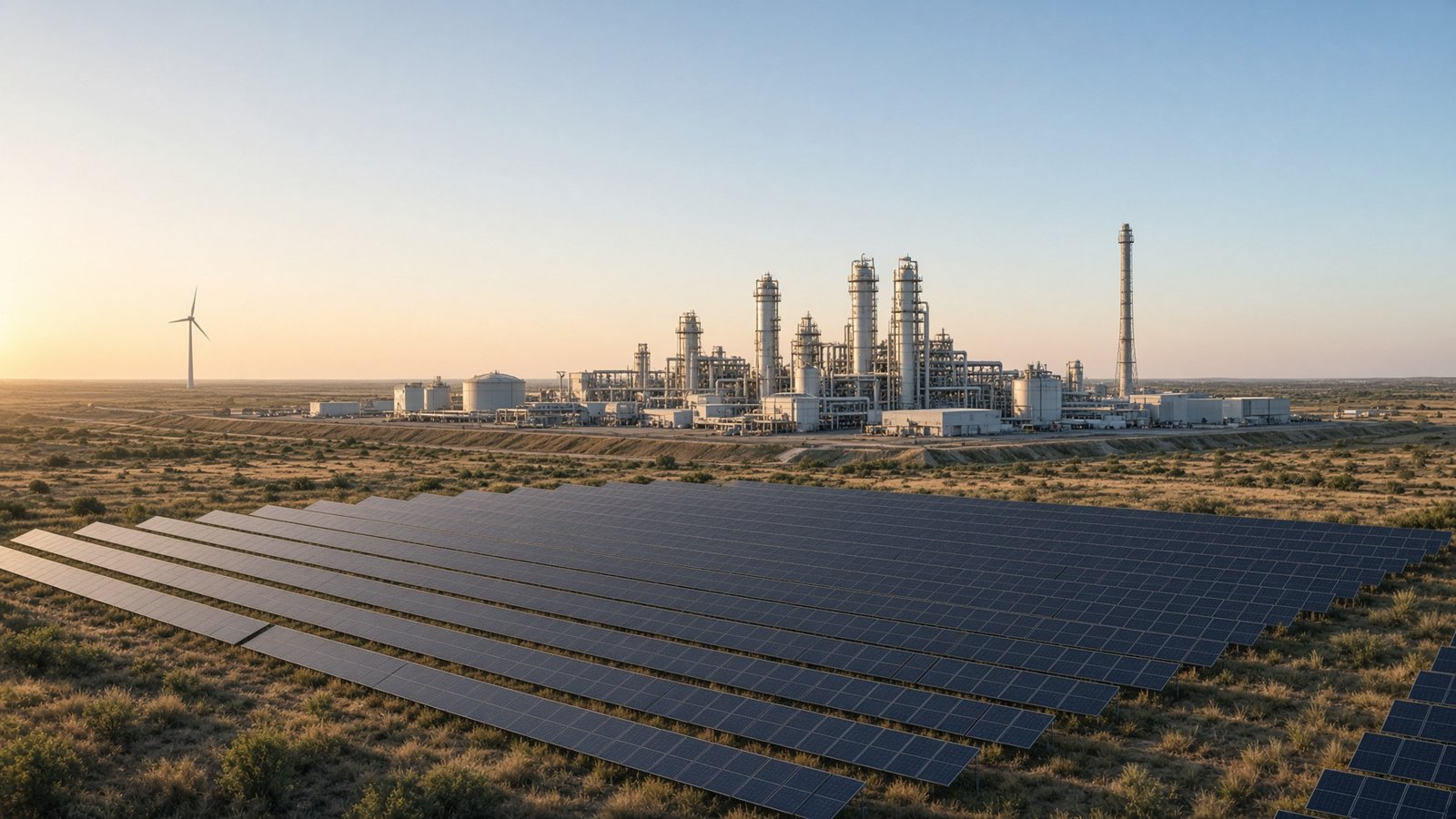
The photograph of solar in front of a gas plant is honest only if the interconnection study exists.
A crew that does not go home is a failed company, whatever the emissions intensity. ISO 45001 alignment, competence gates and stop-work are sustainability. Everything else is downstream of that.

In practice
A solar field in front of a plant is one picture. A well pad returned to grassland is another. We keep both in the file. The second is harder and more honest.
Capability notes
ISO 45001-aligned HSE, competence gates and stop-work authority.
Cuttings, water, methane and restoration as operating practice.
Transparent administration of capital and campaigns.
Renewables and storage only where resource, grid code and offtake are real.
Production issues, not a sustainability appendix.
Proven versus aspirational, labelled in the same document.
Operators ask
We publish practices and gates. A score without a method statement is a poster.
Offsets are not a barrier. We reduce what we can control, then we say what remains.
Where it displaces higher-intensity fuel and the infrastructure is honest. Not as a slogan.

From the field
How energy companies actually work
Primary barrier is usually hydrostatic — the mud column. Secondary is mechanical — the BOP. If either is unproven, the bit does not turn.
Offshore is weather, marine spread and the stack. Onshore is access, water, pads and neighbours. Do not copy a jack-up plan onto a land pad.
A hold-point is a named gate with a criterion and an owner. ISO 45001 is the management-system language. A poster is not.
Solar on a producing location still needs isolations, lifting and SIMOPS. Reliability first. Intensity reduction second.
Investor administration uses the same idea as well control: nothing posts without evidence.
Roads, noise, local workforce and grievance routes belong in the mobilisation pack.
Safety as an operating condition
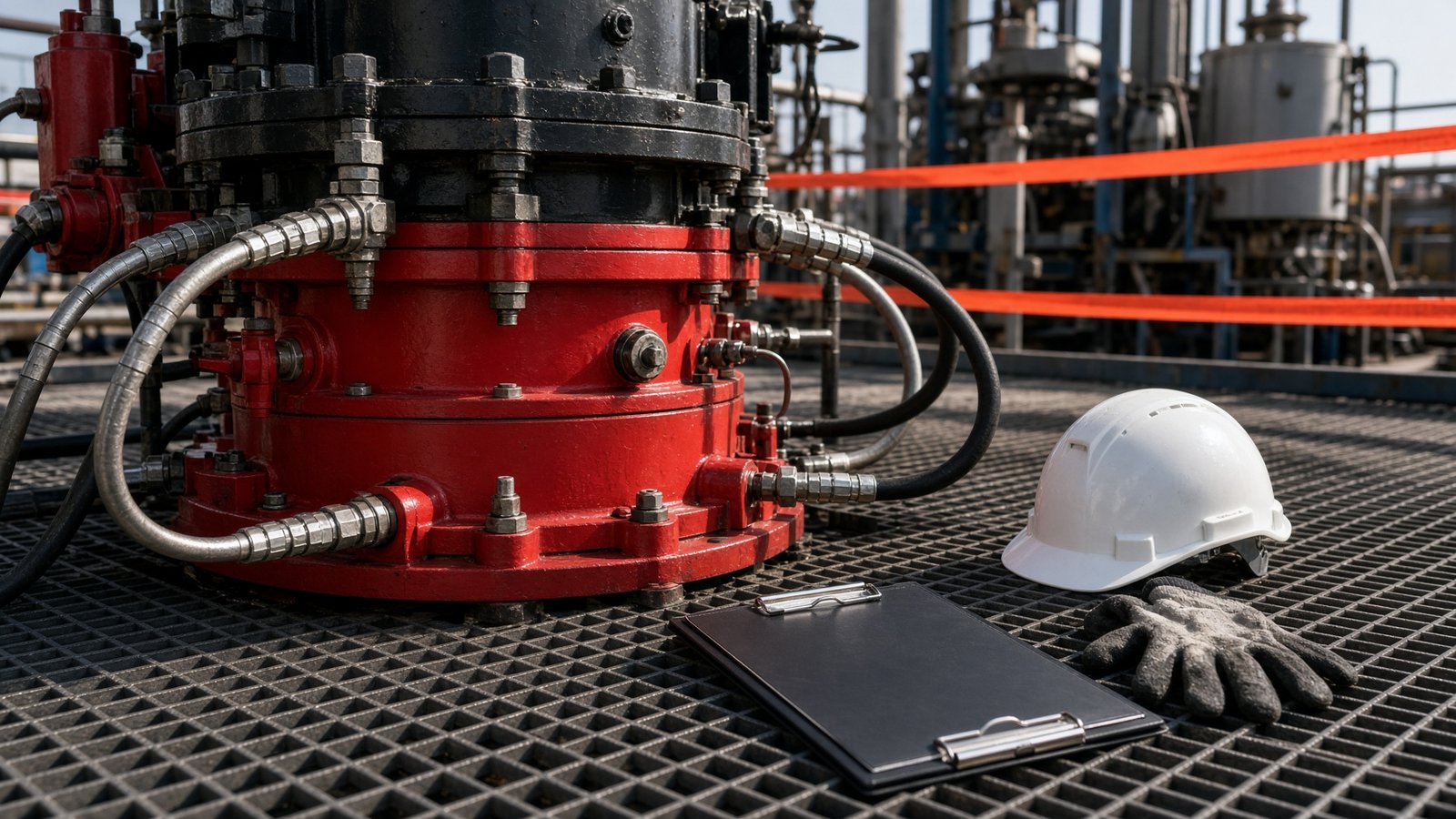
P&ES treats competence, barriers, SIMOPS and return-to-service as hold-points. Digital tracking names who released the step. Stop-work is not insubordination.
The energy system
Upstream
Exploration, appraisal and development are different jobs. The abandonment plan should be visible before the first joint.
Plant
Inspection planning is production support, not a compliance tax.
Power
Interconnection and offtake decide whether a plant is an asset or a stranded slide.
People
Tickets have dates. A frozen crew list is a hold-point. A CV is a biography.

SUSTAINABILITY, SAFETY, RESPONSIBILITY
At Petroleum & Energy Surges, sustainability is part of how we make decisions, manage operations, and serve the communities around us. We are committed to creating long-term value while protecting people, respecting the environment, and operating with integrity.
As a global energy organization, we recognize our responsibility to improve the way energy services are delivered. We continuously strengthen our processes, technologies, and management systems to reduce environmental impact and support responsible development.
Our people are at the heart of this commitment. We work to provide safe, fair, and respectful conditions where employees, contractors, customers, and community members can thrive.
Sustainability also depends on open relationships. We engage stakeholders, listen to feedback, share relevant information transparently, and build partnerships based on trust and mutual respect.
We aim for every operation to protect people, prevent harm, reduce environmental impact, and create positive value for the communities we serve.
OUR COMMITMENT
We make health and safety a priority in every activity, working to prevent incidents, manage risks, and provide safe conditions for everyone connected to our operations.
We improve processes, apply responsible technologies, and manage resources carefully to reduce our environmental footprint and support a lower-impact future.
We promote fair working conditions, equal opportunity, professional development, and respect for the human rights and dignity of employees, partners, and communities.
We uphold strong corporate governance, reject corruption, and conduct business with transparency, accountability, and respect for applicable laws and standards.
We invest in practical safety training, clear communication, and risk awareness so that people are equipped to make safe decisions before work begins.
We monitor performance, assess workplace conditions, learn from experience, and strengthen our systems to improve safety, operational quality, and sustainability.
Through responsible leadership, capable people, and continual improvement, Petroleum & Energy Surges is working to create a safer, stronger, and more sustainable future.

OUR APPROACH
Responsible operations that protect people, communities, and the environment.
Progress that is measured not only by performance, but by the care we take along the way.
Keep reading