Technical depth
Experienced personnel and structured methodologies across drilling support, production services and integrated field operations.

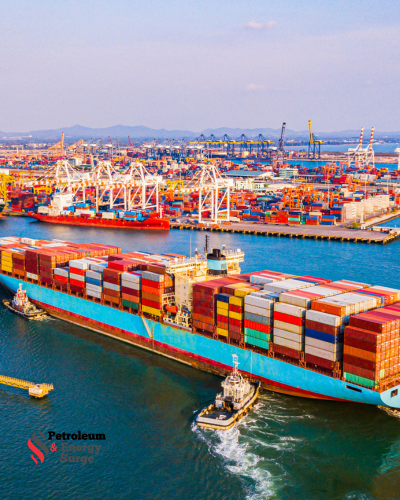
Who We Are
Petroleum & Energy Surge is a disciplined energy company. We combine field capability in petroleum and drilling with a modern record system for approved investors — and we treat energy transition as execution.
Energy is capital-intensive and tightly regulated. Our work is therefore conservative in process and ambitious in competence: clear scopes, competent people, documented decisions.
Whether the engagement is an offshore campaign, an onshore pad programme, a renewable interconnection or portal administration, the same principles apply.
At a glance
Experienced personnel and structured methodologies across drilling support, production services and integrated field operations.
Safety is treated as a non-negotiable operating condition, embedded in planning, execution and continuous improvement.
Investor records, contracts and wallet activity are maintained inside a controlled portal with clear status and audit trails.
We advance cleaner options without abandoning the reliability that industry and communities still require today.
Company identity
P&ES exists to deliver disciplined energy operations and clear administration. We are organised around practical execution: scopes that can be measured, people who can be held accountable, and records that survive review.
We work with operators who need field capability, drilling support and integrated services — and with approved participants who require structured portal access under defined terms. We do not sell slogans, unverified capacity claims, or investment outcomes that cannot be governed by written process.
Our brand promise is deliberately narrow: substance over noise. That means saying no to work we cannot staff competently, documenting constraints as carefully as opportunities, and treating safety and record integrity as part of the product.

Operating philosophy
In energy work, outcomes are shaped long before mobilisation. Access, weather, permits, barrier philosophy, logistics and simultaneous operations either get designed into the plan — or they become emergencies on location.
P&ES therefore treats planning as an engineering discipline. We prefer named owners, written interfaces and hold-points that stop work when conditions change. Improvisation is not a culture; competence under pressure is.
The same logic applies to investor administration. Contracts, wallet activity and status updates must match reality. Digital transparency is a control system, not a brochure feature.
What we do
Petroleum
Production support, field coordination, asset integrity and HSE discipline aimed at continuity and accountable technical execution.
Learn more →Drilling
Marine and land programmes planned around weather, access, well control and logistics — not catalogue claims alone.
Learn more →Integrated
Single accountable structure across fabrication, campaign maintenance, project controls and asset support.
Learn more →Transition
Cleaner generation and integration strategies treated as operating systems: interconnection, offtake and reliability first.
Learn more →Fleet
Capability matched to water depth, pad design, remote conditions and HSE requirements for each scope.
Learn more →Portal
Structured plans and records for approved participants under risk disclosure, terms and administrative approval.
Learn more →Principles explained
Field reports, contracts and portal status must describe the same reality. Gaps between “what happened” and “what was written” destroy trust faster than any technical setback.
Permit-to-work, barrier management and SIMOPS are operating conditions. Stop-work authority is real. Schedule pressure never legitimises uncontrolled risk.
Societies still require molecules and electrons that arrive on time. Transition plans that create blackouts or fuel shortfalls are not responsible plans.
Every active stream has a named owner. Progress, constraints and decisions are visible to leadership — not buried in informal side channels.
Plan thoroughly, execute cleanly, capture lessons. The next campaign should be safer and tighter than the last because the organisation actually learns.
For colleagues, clients, communities and the environments where we work. Licence to operate is earned in process quality as much as in technical results.
How we engage
Ambiguous engagement is where most energy projects lose time, money and trust. Unstated assumptions become emergencies on location; informal side agreements become disputes in close-out.
P&ES prefers a simple, inspectable five-step sequence so both sides know what has been agreed, what is excluded, and how progress will be judged. The sequence applies to operational campaigns, integrated support and structured portal administration for approved participants — scaled to the size of the work, never skipped.
Before resources are committed, we define the problem in plain language: what must be achieved, what constraints already exist, who the interfaces are, and how success will be recognised.
We establish: objectives and success criteria; known constraints (site, weather, permits, grid, commercial); stakeholders and decision rights; risks that must be designed out early.
Why it matters: Teams that mobilise on vague intent invent scope under pressure. Clarifying the need prevents that drift and surfaces conflicts while they are still cheap to resolve.
Verbal understanding is not a scope. Deliverables, exclusions, HSE expectations and commercial terms are documented so both parties can inspect the same text after memory fades.
We document: work packages and acceptance criteria; explicit exclusions and client-retained responsibilities; HSE and quality requirements; commercial basis, change control and reporting cadence.
Why it matters: Most disputes are scope disputes in disguise. A written scope protects the client from silent under-delivery and protects the team from unbounded “just one more thing” expansion.
Planning is treated as an engineering discipline. Competence, logistics, permits and contingency are designed in — weather windows, access, SIMOPS and barrier philosophy are inputs, not surprises.
We prepare: method statements and sequence of work; named roles and competency expectations; materials, marine or land logistics; permits, isolations and emergency response readiness; hold-points and stop-work triggers.
Why it matters: Offshore and onshore campaigns fail when logistics, barriers or simultaneous operations are hoped away. Designing them in reduces idle time, rework and uncontrolled risk.
Execution runs under named supervision with status that leadership can see. Constraints are escalated early; hold-points stop work when conditions change rather than pushing problems downstream.
We maintain: daily or agreed-period status against plan; permit-to-work and barrier verification in the field; visible change requests when scope or conditions shift; immediate escalation of safety, quality or interface issues.
Why it matters: Late surprises destroy schedules and trust. Transparent reporting turns problems into decisions while options still exist.
Work is not finished when the last tool is demobilised. Handover packs, aligned records and captured lessons complete the engagement so the next campaign is safer and tighter.
We deliver: documented handover against acceptance criteria; field, commercial and portal records that match; punch-list close-out or explicit residual actions; after-action notes on what worked, what failed and what changes next time.
Why it matters: Organisations that skip close-out repeat the same failures. Learning is part of the product — for operational work and for administrative process quality.
If you are preparing an enquiry, the most useful starting materials are: a plain-language objective, known site or system constraints, decision contacts, and any hard deadlines or regulatory windows. We will help turn that into a written scope before commitment.
HSE hold-points
A hold-point is a planned pause in the work sequence. Nothing proceeds past it until defined safety, integrity or environmental conditions are checked, recorded and accepted by the person with authority to release the next step.
Hold-points exist because energy work is sequential and unforgiving: once a barrier is broken, a well is opened, or simultaneous operations begin, recovery options narrow quickly. P&ES designs hold-points into method statements during Plan and resource, and enforces them during Execute and report. Schedule pressure does not delete a hold-point; it only forces a decision — verify and proceed, or stop and replan.
Pre-mobilisation
Confirm that named roles are filled by people with the required competency, induction and site access. Verify emergency response contacts, medical readiness and that critical equipment certificates are current.
Release condition: Competency matrix signed; certificates and inductions recorded; mobilisation list frozen against the plan.
Before invasive work
No breaking of containment, hot work, confined-space entry or electrical intervention until isolations are in place, verified and cross-checked against the permit. Energy sources — pressure, electrical, mechanical, process — are treated as live until proven otherwise.
Release condition: Valid permit; isolations tagged and verified by an independent checker where required; toolbox talk completed for the crew on shift.
Well operations
Before drilling ahead, tripping, completing or intervening, confirm that primary and secondary barriers match the barrier philosophy. Blowout-preventer tests, well-control drills and fluid properties are not paperwork exercises — they are the line between a routine step and a loss of control.
Release condition: Barrier status recorded; failed tests closed out; well-control readiness confirmed by the authorised supervisor.
Marine & land interface
When lifting, vessel operations, drilling, construction or production activities overlap in time or space, simultaneous operations (SIMOPS) must be authorised against a defined matrix of priorities, exclusion zones and communication channels.
Release condition: SIMOPS matrix reviewed for the shift; conflicting activities suspended or sequenced; stop-work authority understood by all parties.
Lifting & load handling
Critical lifts do not start on verbal agreement. The lift plan, equipment certification, tag lines, exclusion zones and weather or sea-state limits must be confirmed before the load leaves the deck or pad.
Release condition: Approved lift plan briefed; exclusion zone clear; banksman and crane operator aligned; environmental limits within plan.
Environmental
Before activities that can release hydrocarbons, chemicals, cuttings or wastewater, confirm containment, spill response kits and permitted discharge routes. Environmental hold-points protect licence to operate as directly as personal safety gates protect people.
Release condition: Containment inspected; spill response staged; permits and volume limits understood by the supervising role.
Energy isolation
Maintenance on rotating equipment, electrical systems or pressurised packages requires positive isolation. Lock-out/tag-out is complete only when every relevant energy source is isolated, locked and verified zero-energy where the method requires it.
Release condition: LOTO register complete; try-start or residual-energy check done; each lock owner identified before work begins.
Handback
After invasive work, the system is not “back online” until barriers are reinstated, permits closed, and the operating team accepts the handback. Incomplete reinstatement is a common root cause of the next incident.
Release condition: Isolations removed in controlled order; function checks complete; permit closed; operating authority accepts the asset.
How hold-points are enforced
Each hold-point has an owner (usually the supervising authority for that step), a checklist or test criterion, and a record — permit, barrier sheet, SIMOPS log or handback form. If the criterion fails, work stays stopped. Escalation goes to the named decision-maker; it does not go to informal “we’ll fix it later” agreements.
Stop-work authority is explicit: any person on the job can halt activity when a hold-point is bypassed or conditions change. Restart requires the same verification standard as the original release — not a shortcut version under schedule pressure.
TECHNOLOGY, RELIABILITY, RESPONSIBILITY
At Petroleum & Energy Surges, we combine industry knowledge, practical technology, and capable people to help deliver the energy and services that modern life depends on. From production and refining to power solutions and field support, we work to make energy more reliable, efficient, and responsible.
The world needs energy that remains affordable and dependable while steadily reducing its environmental impact. We respond by strengthening infrastructure, improving operational performance, and investing in solutions that support a more diverse and resilient energy future.
Technology is central to how we work. We use data, engineering, and innovation to improve asset performance, support safer operations, optimize energy use, and help customers make informed decisions about their energy needs.
Our role extends beyond supplying energy. We aim to be a trusted long-term partner to customers and communities—delivering practical solutions with care, accountability, and a clear focus on lasting value.
We are advancing from traditional energy services toward an integrated model that connects production, development, technology, power solutions, and responsible delivery.
WHAT DRIVES US
We apply practical innovation to improve efficiency, strengthen reliability, reduce waste, and support the responsible development of energy resources.
We support the supply of essential fuels, refined products, and energy services that help households, businesses, and industries operate with confidence.
We are pursuing cleaner and more efficient ways to serve energy demand through improved operations, renewable opportunities, lower-emission solutions, and thoughtful environmental stewardship.
Our people are our greatest strength. We invest in training, mentoring, and inclusive leadership so teams can work safely, collaborate effectively, and grow their capabilities.
Honesty, respect, ethical conduct, and compliance guide our decisions. We hold ourselves accountable to high standards in every customer relationship, project, and community where we operate.
From electrical repairs and inspections to lighting, surge protection, and energy-support services, we connect customers with qualified professionals and solutions designed for safety, convenience, and peace of mind.
By bringing together experience, technology, responsible operations, and a service-first culture, Petroleum & Energy Surges is helping customers meet today’s energy needs while preparing for the opportunities ahead.

OUR DIRECTION
Delivering practical energy services today while investing in a cleaner, stronger future.
Powered by people, strengthened by technology, and guided by responsibility.
Digital hold-point tracking
Hold-points only work if status is visible. Digital tracking turns each gate into a live record: who owns it, what evidence is required, whether it is open, blocked or released, and when it was closed.
P&ES treats digital tracking as operational infrastructure — not a dashboard for show. Supervisors update status at the gate; leadership sees blocked points without waiting for end-of-day narrative; close-out cannot complete while critical gates remain open.
Gate ID, owner role, release criteria and evidence type loaded against the method statement.
Hold-point opens when the preceding activity reaches the gate; status shows Pending verification.
Owner records checks, attaches evidence (test result, permit, photo log) and signs digitally.
System marks Released or Blocked. Blocked gates escalate and freeze dependent steps.
Time-stamped history retained for shift handover, incident review and formal close-out.
Each hold-point carries a clear state: planned, pending, released, blocked or waived (waiver only with named authority and written justification).
Permits, BOP test sheets, LOTO registers, SIMOPS sign-offs and handback forms link to the same record the supervisor closes.
Downstream activities stay locked until upstream gates release — reducing the temptation to “work around” a paper form left in a vehicle.
Incoming supervisors inherit open and blocked gates immediately. Daily reports show hold-point health, not only progress percentage.
Anyone can trigger stop-work; the event is recorded against the active gate with time, reason and restart verification.
Campaign close-out is blocked while critical gates remain open or unresolved — the same discipline applied to portal and field records.
ISO 45001
ISO 45001 is the international standard for occupational health and safety management systems. It requires organisations to identify hazards, control risks, involve workers, and continually improve — through documented process, not goodwill alone.
P&ES aligns HSE practice with the intent of ISO 45001: leadership accountability, worker participation, risk-based planning, operational control, performance evaluation and improvement. Hold-points and digital tracking are practical expressions of operational control and documented information under that framework.
Hazard identification, risk assessment, legal requirements, objectives and HSE controls designed into scopes and method statements.
Competence, permits, isolations, SIMOPS, emergency preparedness and hold-point enforcement during execution.
Inspections, barrier tests, incident and near-miss reporting, audit of gate compliance and leadership review of HSE data.
Corrective action, updated procedures, competency refresh and redesigned hold-points where gaps appear.
Leadership
ISO 45001 places ultimate responsibility on top management. P&ES expects named HSE ownership on every campaign — not delegated invisibility.
Participation
Stop-work authority, toolbox talks and consultation on method statements give the people closest to the hazard a formal voice.
Risk-based
Hold-points are scaled to risk: barrier gates on well work, LOTO on energy isolation, SIMOPS where interfaces collide.
Documented information
Digital gate history, permits and handbacks support internal review and external scrutiny without reconstructing events from memory.
Emergency
Drills, contacts and equipment readiness sit inside planning gates so emergency response is verified before high-risk steps begin.
Improvement
Close-and-learn feeds non-conformances and near-misses back into updated criteria — the Act stage of the cycle made routine.
Digital hold-point tracking supports ISO 45001 operational control and documented information: evidence is attached at the gate, status is visible, and improvement actions can reference a specific failed or blocked step rather than a vague “safety issue.”
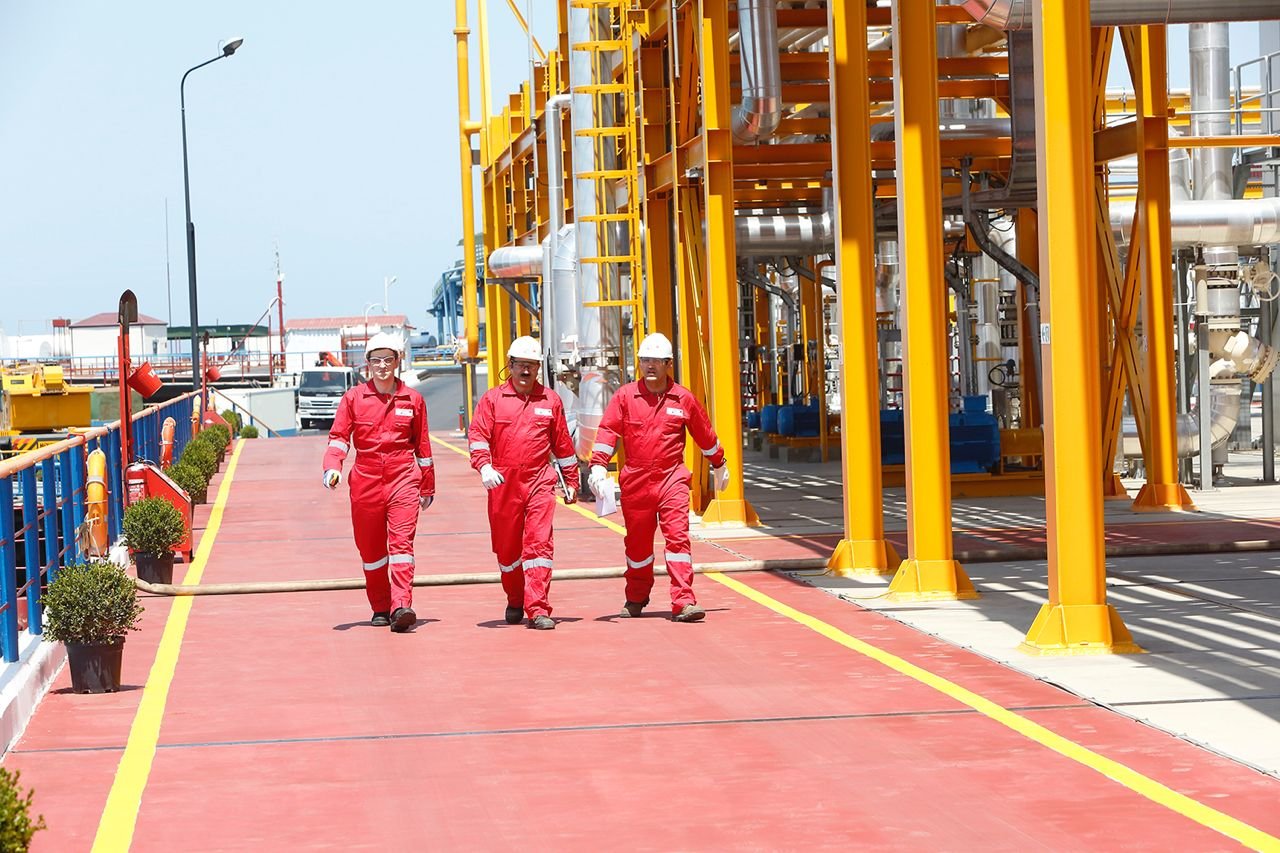
People & culture
People — not slogans — determine whether a drilling programme, maintenance campaign or investor record stays clean under pressure. P&ES builds teams around verified competence, clear role definitions and supervision that is present before problems escalate.
Field crews, engineers, project controllers and portal administrators share the same expectation: document what you do, escalate what you cannot resolve, and never trade safety for schedule.
Industry context
Transport fuels, industrial heat, petrochemical feedstocks and reliable power remain tightly coupled to petroleum systems even as renewable capacity grows. Operators must keep production safe and available while reducing intensity and sequencing capital toward lower-carbon options that actually interconnect and operate.
That is not a branding problem. It is a planning, logistics, engineering and governance problem. Blackouts and fuel shortfalls are not acceptable side-effects of ambition. Reliability is the first design constraint — for conventional work and for transition programmes alike.
P&ES is organised for that reality. We support conventional operations where continuity is non-negotiable, and we support transition work where grid codes, storage, offtake and operational readiness determine whether a project creates value or merely headlines.
Molecules and electrons that arrive on time remain foundational to mobility, industry and community life. Plans must protect that baseline.
Incidents are rarely “one bad moment.” They are usually the end of a chain of unmanaged interfaces, weak barriers and silent assumptions.
Approved participants need status and contracts that can be inspected. Transparency is a control, not a marketing layer.
Renewables and efficiency matter where system fit and economics are real. Capacity without interconnection is incomplete work.
Transition stance
Transition is a multi-decade capital programme. We treat it as execution: continuity of supply, efficiency, methane and flaring discipline, and selective lower-carbon growth that protects system reliability.
No transition plan that creates blackouts or fuel shortages is a plan. We help clients sequence hybridisation, interconnection and operational frameworks so cleaner capacity can actually run.

Governance & trust
Trust in energy operations and in capital administration is built the same way: clear ownership, written scopes, and status that can be inspected after the fact.
P&ES emphasises documented controls — from field close-out packs to portal wallet activity — so clients and approved investors can see process quality, not only outcomes. Risk disclosure and terms of participation apply to all portal plans.

Heritage & direction
Our heritage is not nostalgia. It is evidence that process quality compounds: safer campaigns, tighter interfaces, and records that still make sense years later.
Vision, mission and values translate that history into daily behaviour — integrity, safety, excellence, accountability, continuity and respect — so new work inherits the same standard.
Knowledge
If success criteria, exclusions and interfaces are not written, teams invent them under pressure. Define the problem before mobilising people and equipment.
Simultaneous operations without defined priorities create collision points. Plan interfaces early; give stop-work authority real teeth.
Inspection planning, corrosion control and mechanical integrity programmes cost less than unplanned downtime and loss of licence to operate.
Generation without interconnection, storage or offtake is incomplete. Integration strategies must respect grid codes, load shape and commercial reality.
Client and investor confidence depends on contracts, status and field reports that match. Digital transparency is a control system.
Named owners, demonstrated skills and after-action learning improve the next job. Culture is what people do when supervision is thin.
Common questions
No. We support oil and gas operations, offshore and onshore drilling programmes, integrated maintenance and fabrication coordination, renewable integration strategies, and structured portal administration for approved participants.
Portal plans are available only to approved participants, subject to risk disclosure, terms of participation and administrative review. Access is not an open public offer.
Continuity of supply first; intensity reduction where practical; selective lower-carbon growth only where interconnection, operations and offtake are real.
See Services, Our People, Sustainability, and Investment — or contact support@v2.petroleumandenergysurges.com.
Next step
Whether you need operational support, a transition discussion, or information on portal participation for approved investors — we respond with substance, scoped answers and documented process.